Budgeting for agentic search while it’s still small
Budget season asks a new question this year: how much should go to AI search? The honest answer depends on your audience, your category and where you stand today. Here’s how we’d approach it.

Search didn’t shrink. It got a new user.
People still search. Now their AI assistants search too. An agent does much of the clicking and comparing, then hands back a shortlist of brands. Discovery and decision, once two steps, collapse into one.
People haven’t left. They move down the funnel, to a lighter round of checking: they search for the brand the agent named, or type its address. Google says 99% of people who research a purchase in ChatGPT still consult Google before they decide. It’s Google’s survey about Google, so treat it with care. But the direction matches what we see: search demand isn’t falling, it’s being redistributed.
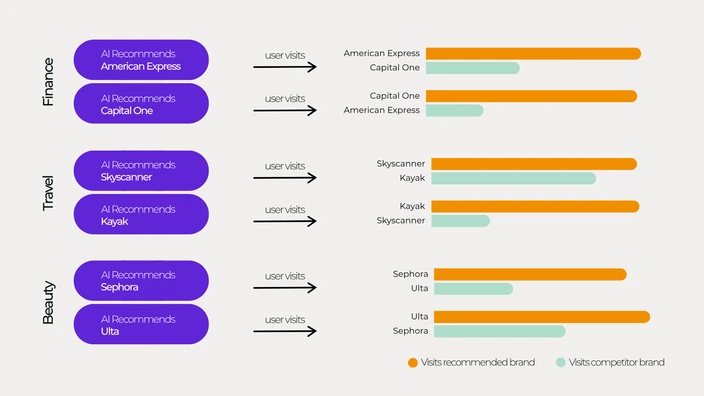
That matters for budgets. The effect of AI search shows up in brand searches and direct visits, not in AI referral traffic. Judge the channel by the clicks it sends and it looks small. You’ll underfund it. Agentic search looks more like brand marketing.
A new objective: the recommendation
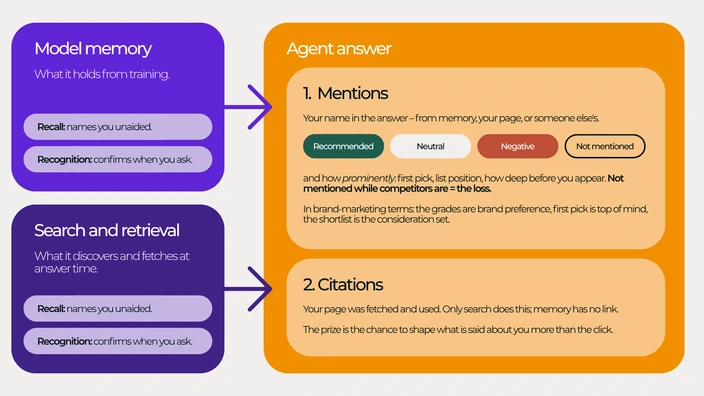
Most of the conversation is about “AI visibility”: dashboards, scores, rankings. But SEO-style visibility isn’t the goal here. An agent’s answer names a few brands. Being one of them, and being recommended, is what moves a buyer. Being cited somewhere in the answer is worth little if you aren’t named at the end.
Agent answers are mentions first, citations second. And the shortlist forms largely in the model’s memory, before it searches. The search then confirms and describes. So being findable is the floor. Being remembered and preferred is the game.
Two requirements
Getting recommended takes two things.
1. Long-tail SEO mastery.
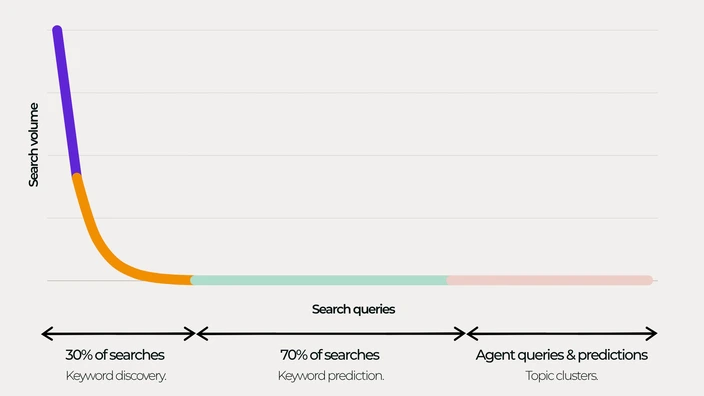
The long tail is exploding. People ask assistants longer, more specific questions, and agents turn each one into several searches of their own. Covering that tail with audience-led content, at scale, is Content Engineering, our approach to enterprise SEO. It also catches everything an agent doesn’t recall.
2. Brand marketing to agents.
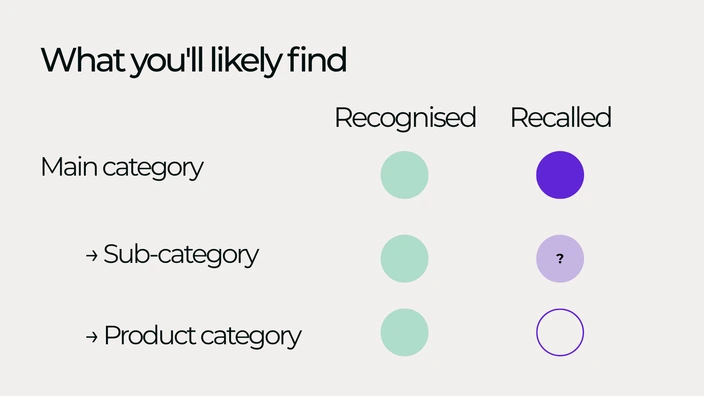
This is how we define AEO. Models know a lot about most established brands, but they recall them in few categories. Ask about a brand by name and the model recognizes it. Ask for the best option for a buyer’s situation and the brand often isn’t named. Closing that gap, from recognition to recall, is brand marketing with a new audience. Most of what a model knows about a brand was written by other people, on sources the model trusts. So the work is getting the right facts, in many wordings, onto those sources.
Why the usual numbers mislead
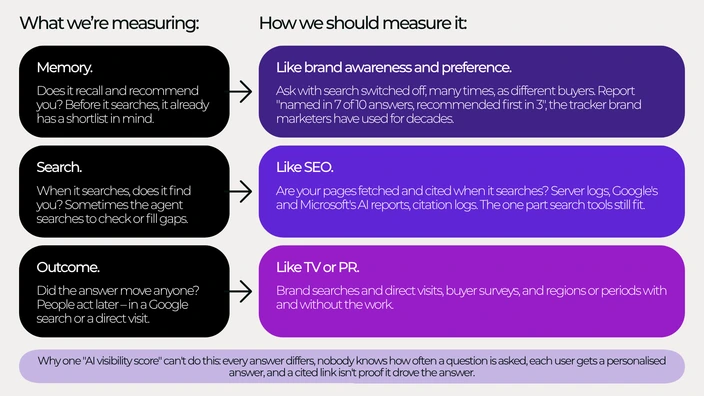
Budgets follow measurement, and this is where most plans go wrong. Agentic search isn’t visibility, rankings or clicks. It’s three things, each measured in its own way:
- Memory. Does the agent recall and recommend you? Measure it like brand awareness: ask with search switched off, many times, as different buyers.
- Search. When the agent searches, does it find and use your pages? Measure it like SEO: server logs, Google’s and Microsoft’s AI reports, citation logs.
- Outcome. Did the answer move anyone? Measure it like TV or PR: brand searches, direct visits, buyer surveys, and regions or periods with and without the work.
No single “AI visibility score” can do this. Every answer differs, nobody knows how often a question is asked, and each user gets a personalized answer. The trackers still earn their place: they show where competitors are mentioned and you aren’t. That’s where activation starts.
Setting the budget this year
Agentic search is still small, and it’s early days. That’s the opportunity, and it shapes the budget. Four principles:
1. Don’t size it from AI referral traffic.
It’s the wrong measure, and it will tell you to spend nothing.
2. Don’t wait for it to get big.
The playbooks are immature and most brands haven’t started. Starting before the volume and the competition arrive costs less than catching up.
3. Look at the budgets you already have.
Most of the work extends what you already fund. Covering the long tail extends SEO. Getting written about on the sites agents trust is brand and PR work, aimed at a new reader. The question is less “how big is the new pot?” and more “are the existing ones working for agents too?”
4. The genuinely new line is small: a baseline and a strategy.
A baseline across memory, search and outcome, so next year you can show what moved. And a strategy that decides how big everything else should be.
What we’d avoid: a large stand-alone “AI” budget spent on tactics picked before anyone has looked at which agents, segments and sources matter for the brand. That’s guesswork, and it’s the most expensive way to start.
Start with a strategy
Our advice is the same as for any large search decision: get the data, set the strategy, then scale what it selects.
An Agentic Search & SEO Strategy starts from the audience. The keyword universe and the audience’s needs, in their own words, define the Total Addressable Search Market. The brand’s range then narrows it to where demand and supply meet. Within that, the strategy picks the segments worth winning first, with people and with their agents.
Its output is what budget season needs: priorities, targets for each segment, and budget scenarios with the expected return on each. It turns “how much should we spend on AI search?” into a decision you can defend.
Three things to take with you
1. What's changed.
Search didn't shrink; it got a new user. Agents now use search inside a collapsed discovery and decisioning process, and humans use search (and direct traffic) to check what the agent came back with.
2. How agents decide.
The goal is getting recommended, not “AI visibility” or a ranking. The recommendation requires two things: long-tail SEO mastery, and treating AEO as brand marketing to agents.
3. How brands win.
Agentic search is still small but it's early days. Get started before volume and competition arrive; with data, strategy and focus, rather than guesswork, tactics, and scattered activity.
Five ways to begin before the budget is signed off
You don’t need a big budget to start. You need to know where you stand, and a plan.
1. Test your own brand, with search switched off.
Write down the questions your buyers ask: “best X for Y”, “X or Y?”. Ask them in ChatGPT or Claude with web search off, so you see what the model remembers. Are you named? Are you recommended first? Many brands find the model knows them well when asked by name, and forgets them when a buyer asks for options.
Two questions, in this order
Ask the unaided one first. The aided question names your brand, so once you’ve asked it you’ve primed the model and the unaided answer is no longer clean. Start a fresh chat if you’ve already given it away.
- Unaided – does it recall you?
- Question to ask: “Which suppliers of [category] in [market] do you know? List the ten you think of first.”
- Are you on the list? Where?
- Aided – does it recognise you?
- Question to ask: "Does [your brand] sell [category]? What do you know about their range?"
- Does it know the facts?
2. Set a baseline before you spend.
Measuring agentic search properly takes real effort. A baseline doesn’t. Three things you can do now:
Record brand searches and direct visits for the last 12–24 months. Search Console and your analytics already have them.
Pull AI bot visits from your server logs, plus Google’s and Microsoft’s AI reports.
Turn tip 1 into a fixed list of 10–20 questions. Ask each one several times, every quarter, and note the answers.
It’s rough, but next year you’ll be able to show what moved.
3. Use the trackers for one job.
AI visibility trackers are good at showing where competitors are mentioned and you aren’t. That’s where activation starts. Don’t report their score as your result.
4. Audit the budgets you already have.
Take next year’s SEO and PR plans and read them the way an agent would. Does the content plan cover the questions buyers actually ask, or only the head terms? Does the PR plan target the sites the models quote? Two reallocated lines in an existing budget often beat a new one.
5. Decide the strategy before you buy the tactics.
Tactics are easy to buy and hard to defend when nobody has looked at the audience first. An Agentic Search & SEO Strategy works the other way round: it starts from your audience’s needs and ends with priorities, targets and budget scenarios you can take into the budget meeting.